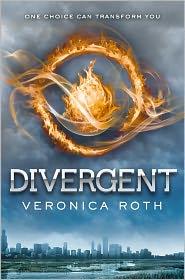
Divergent
by Veronica Roth · 2011
In a future Chicago sorted into five factions by personality trait, a teenager who tests as dangerously 'Divergent' -- fitting no single category -- has to hide what she is or be killed for it.
Worth reading? Divergent works as pure momentum -- Roth built an initiation gauntlet that reads fast and keeps raising the physical and moral cost of every choice Tris makes. The factions themselves don't hold up to much scrutiny as a society, but the book isn't really asking you to scrutinize them.
| Author | Veronica Roth |
|---|---|
| Published | 2011 |
| Publisher | Katherine Tegen Books |
| Category | Fiction |
| Favorite quote | “Fear doesn't shut you down; it wakes you up.” |
The Verdict
The faction system doesn’t survive close scrutiny – as a way to organize a society it’s absurd – but Roth isn’t building a plausible political system, she’s building a pressure cooker for a sixteen-year-old to prove herself in. Judged as that, it works.
The initiation sequence is the book’s engine, and it’s a good one: physical combat, psychological fear tests, and a constant ranking system that turns every training day into a stakes-raising event. Tris is a compelling enough narrator to carry it, sharp and physically capable without being invincible.
The romance with Four leans into a power dynamic (trainer and trainee) that the book is at least aware of, even if it doesn’t fully interrogate it.
Read it if you want a fast YA dystopia with real momentum and a training-gauntlet structure. Skip it if you’ve already burned through The Hunger Games and want something with a genuinely different premise.
you want a fast, plot-driven YA dystopia with a strong-willed narrator and a training-academy structure that keeps the stakes escalating chapter to chapter
you've already read The Hunger Games and want something that doesn't share its dystopian-teen-chooses-a-faction/district DNA -- Divergent leans hard on a familiar template
Book Summary
Roth's Chicago is divided into five factions, each built around a virtue: Abnegation (selflessness), Dauntless (bravery), Erudite (intelligence), Amity (peacefulness), and Candor (honesty). At sixteen, every citizen takes an aptitude test and chooses a faction to join for life, and choosing means leaving your birth family's faction behind for good.
Tris Prior tests as Divergent -- her aptitude spans multiple factions, which the system treats as dangerous because it means she can't be reliably sorted, predicted, or controlled. She hides the result and chooses Dauntless, the faction built around fearlessness and physical courage, and the book's middle section is an initiation gauntlet of fights, fear simulations, and rankings that will cut failed initiates loose entirely.
Underneath the action, the book's real interest is in how rigid identity categories break down under pressure -- the factions each claim to produce a certain kind of virtuous person, but Roth spends the book showing how each one curdles into its own vice (Erudite into arrogance, Dauntless into brutality, Abnegation into self-erasure) when taken to its extreme.
Top 8 Lessons from Divergent
- The faction system sorts people by a single dominant virtue, and the book's tension comes from Tris not fitting cleanly into any one box -- Divergence is framed as dangerous specifically because it resists that kind of control.
- Dauntless initiation is a competitive, elimination-based training gauntlet -- initiates who rank too low don't just fail, they become factionless, a permanent underclass with no home faction at all.
- Each faction's virtue, pushed to an extreme, becomes a flaw: Erudite's intelligence curdles into cold ambition, Dauntless's bravery curdles into recklessness and cruelty, Abnegation's selflessness curdles into self-erasure.
- Choosing a faction means formally leaving your birth family's faction, which the book treats as a real and painful severance, not a minor administrative choice.
- Fear simulations, used both to train Dauntless initiates and later as a weapon, reveal that facing your fears repeatedly is what the faction actually trains for -- not eliminating fear, but functioning inside it.
- The Erudite faction's slow political campaign against Abnegation, built on propaganda about corruption, shows how a society built on rigid categories is vulnerable to one faction weaponizing distrust of another.
- Tris's romance with Four (Tobias) develops inside a power-imbalanced training relationship, and the book is conscious enough to make that tension part of the story rather than ignoring it.
- The ending's mind-control plot twist reframes the entire faction system as more fragile and more exploitable than anyone inside it realized.
Top 4 Quotes from Divergent
"I am selfish. I am brave."
Veronica Roth, Divergent
"Fear doesn't shut you down; it wakes you up."
Veronica Roth, Divergent
"Becoming fearless isn't the point. That's impossible. It's learning how to control your fear, and how to be free from it."
Veronica Roth, Divergent
"No matter how much time passes, no matter what I do, I know my last memory of my mother will always be the moment she died for me."
Veronica Roth, Divergent
Frequently Asked Questions
Is Divergent worth reading?
If you want a fast-paced YA dystopia with a strong training-academy structure, yes. If you've already read The Hunger Games, know it covers similar ground.
What is Divergent about?
Tris Prior lives in a future Chicago sorted into five factions by personality trait, discovers she's Divergent -- fitting no single faction -- and has to hide it while surviving initiation into Dauntless, the faction she chooses.
Is Divergent similar to The Hunger Games?
Yes, structurally -- both are YA dystopias with a strong-willed teenage narrator navigating a rigid societal sorting system, though Divergent's stakes are initiation and social survival rather than a literal death match.
How many books are in the Divergent series?
Divergent is the first of a trilogy, followed by Insurgent and Allegiant.
Is Divergent appropriate for younger teens?
It contains fight scenes and some violence typical of YA dystopia, appropriate for the young-adult audience it's written for.
Ready to read it?
Get Divergent on Amazon