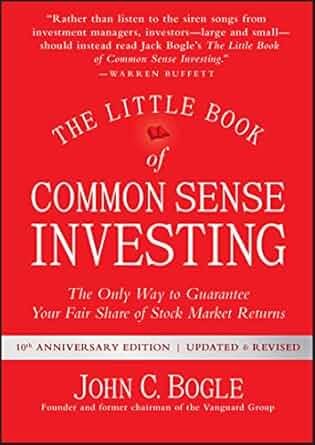
The Little Book of Common Sense Investing
by John C. Bogle · 2007
The index fund pitch from the man who invented the index fund.
Worth reading? The shortest credible case for index investing, written by the man who built the first index fund. If you want one book that ends the "should I pick stocks" debate, this is it. Skip it if you've already read Collins or Malkiel — same conclusion, same math, just Bogle's voice.
| Author | John C. Bogle |
|---|---|
| Published | 2007 |
| Category | Business & Money |
The Verdict
Bogle founded Vanguard and created the first index fund, then spent fifty years watching the math prove him right. Costs compound against you, few managers beat the market after fees, and owning the whole market wins by default. Two hundred small pages. You can finish it in an afternoon and act on it the same day.
beginners who want the shortest credible path to a lifelong investment strategy
you've already read Collins or Malkiel (same conclusion, same math)
Book Summary
Owning the whole market through a low-cost index fund and holding it forever beats trying to beat the market, because active investing is a loser's game once costs are counted. Common sense says the simplest, most efficient strategy is to buy and hold all publicly held businesses at very low cost. The market return is a zero-sum game before fees and a losing one after them, so the only guaranteed fair share is the index itself. Keep costs near zero, ignore the noise, and let compounding work for decades.
Top 6 Lessons from The Little Book of Common Sense Investing
- Buy the whole market at the lowest cost and hold it forever.
- After fees, beating the market is a loser's game.
- Costs are the one variable you control — keep them near zero.
- Don't try to time the market; time in the market wins.
- The index fund is the only product that guarantees your fair share.
- Ignore the financial media's noise; it costs you returns.
Frequently Asked Questions
Is The Little Book of Common Sense Investing worth reading?
Yes for beginners who want the case for indexing from its inventor. No if you've already read Collins or Malkiel.
What is the main idea of The Little Book of Common Sense Investing?
Owning a diversified low-cost index fund and holding it long term beats active picking once costs are counted.
How long does it take to read The Little Book of Common Sense Investing?
216 pages, written plainly — a weekend or a few evenings.
Who should read The Little Book of Common Sense Investing?
Beginners who want the shortest credible path to a lifelong investment strategy.
Ready to read it?
Get The Little Book of Common Sense Investing on Amazon