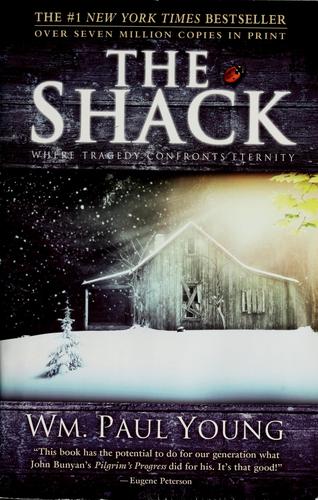
The Shack
by William P. Young · 2007
A grieving father gets a note inviting him back to the shack where his daughter was murdered -- and finds God waiting there, represented as a Black woman, a Middle Eastern carpenter, and an Asian woman, ready to talk through his anger.
Worth reading? The Shack became a phenomenon because it does something a lot of grief-and-faith books don't: it lets its protagonist be furious at God without immediately punishing that fury. The unconventional depiction of the Trinity drew real theological criticism from some conservative Christian readers, and the dialogue is often more sermon than scene. But the emotional core -- a father working through his daughter's murder -- is sincere, and it's the reason the book found the audience it did rather than staying a niche self-published title.
| Author | William P. Young |
|---|---|
| Published | 2007 |
| Publisher | Windblown Media |
| Category | Religion & Spirituality |
| Favorite quote | “Guilt will never help you find freedom in me.” |
The Verdict
The Shack’s real achievement is letting its protagonist stay angry at God for longer than most faith-and-grief fiction allows, which is likely why it found readers well outside its original self-published, word-of-mouth audience.
It’s fair to be skeptical of the theology, though. The unconventional depiction of the Trinity drew genuine, substantive criticism from conservative Christian theologians, and much of the book reads as a sermon wearing a novel’s clothes – long theological dialogues stand in for scenes more often than not.
Read it if you want a sincere, emotionally direct novel about grief, anger, and forgiveness, and you’re comfortable with unconventional theology. Skip it if you want doctrinally conventional Christian fiction, or dialogue that feels less like a lecture.
you want a novel that processes grief and theological doubt through an accessible, emotionally direct story, and you don't mind its theology being unconventional by traditional Christian standards
you want doctrinally conventional Christian fiction, or fiction with subtler, less didactic dialogue -- The Shack's theological conversations are extended and explicit, closer to a sermon in narrative form than to naturalistic dialogue
Book Summary
Mack Phillips, whose young daughter Missy was abducted and murdered years earlier, receives a mysterious note inviting him back to the shack where evidence of her death was found, and returns to confront both the location and his unresolved anger at God.
At the shack, Mack encounters God represented in three unconventional forms: "Papa," a Black woman representing God the Father; Jesus, depicted as a Middle Eastern carpenter; and Sarayu, an Asian woman representing the Holy Spirit -- a portrayal that generated significant theological debate, with some conservative Christian critics calling it doctrinally unorthodox and others embracing it as a fresh, humanizing approach.
The bulk of the book is an extended theological conversation in which Mack works through his anger, his questions about suffering and evil, and his need to forgive both God and his daughter's murderer, structured more like a series of dialogues than a conventional plot.
The book's popularity outside traditional publishing channels -- it began as a self-published book Young wrote for his own children before word-of-mouth turned it into a bestseller -- is itself part of its story, reflecting how directly it connected with readers processing their own grief or doubt.
Top 10 Lessons from The Shack
- The book portrays God the Father as a Black woman, Jesus as a Middle Eastern carpenter, and the Holy Spirit as an Asian woman, a deliberately unconventional depiction meant to strip away preconceived, often culturally narrow images of God.
- Mack's anger at God is treated as a legitimate, even necessary, part of processing grief rather than something to be immediately corrected or suppressed.
- The book frames forgiveness -- of both God and his daughter's murderer -- as a process Mack has to work through, not an instant decision.
- The Shack's theology, especially its depiction of the Trinity and its treatment of free will and suffering, was significant enough to draw real public debate and formal criticism from some conservative Christian theologians and denominations.
- The book originated as a self-published work Young wrote primarily for his own children, and its bestseller status came almost entirely through word-of-mouth rather than traditional publishing marketing.
- Much of the book is structured as extended dialogue and theological conversation rather than conventional scene-and-action storytelling, which some readers find profound and others find didactic.
- Mack's turning point isn't a single realization but a sequence of separate conversations, one on anger, one on judgment, one on forgiveness, reflecting the book's approach of working through grief in stages rather than resolving it all at once.
- The character of Sarayu, representing the Holy Spirit, is written to speak in metaphor and paradox rather than direct statement, a choice that reads as either poetic or evasive depending on the reader's patience for extended allegory.
- The novel frames suffering as something God works good out of rather than something God directly causes or wills, a distinction the book leans on to answer the 'why do bad things happen' question without making God complicit.
- Missy's murderer is never given a redemption arc or resolution within the book -- Mack's forgiveness is framed as something he does for his own healing, independent of whether the perpetrator ever faces justice or repents.
Top 4 Quotes from The Shack
"You cannot produce trust, just as you cannot 'do' humility. It either is or isn't."
William P. Young, The Shack
"Forgiveness does not create relationship. Unless people speak truth about what they have experienced, forgiveness is superficial."
William P. Young, The Shack
"Guilt will never help you find freedom in me."
William P. Young, The Shack
"Just because I work incredible good out of unspeakable tragedies doesn't mean I orchestrate the tragedies."
William P. Young, The Shack
Frequently Asked Questions
Is The Shack worth reading?
If you want an emotionally direct novel about grief and faith, yes, though go in aware the theology is unconventional and the dialogue is often more sermon than scene.
What is The Shack about?
A grieving father returns to where his daughter was murdered and encounters God represented in three unconventional human forms, working through his anger and grief across a series of theological conversations.
Is The Shack theologically controversial?
Yes -- its depiction of the Trinity, particularly God the Father as a Black woman, drew real criticism from some conservative Christian theologians as doctrinally unorthodox, while other readers embraced it.
Is The Shack based on a true story?
No -- it's a work of fiction, though Young has said it draws on his own experiences processing personal trauma and faith.
Ready to read it?
Get The Shack on Amazon