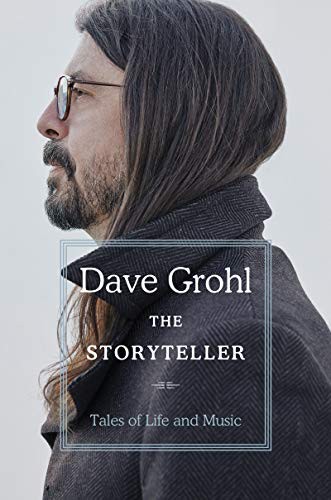
The Storyteller
by Dave Grohl · 2021
The drummer who lost Kurt Cobain and became a stadium-filling frontman anyway tells his life in standalone stories instead of a straight chronology -- because that's how he says he actually remembers it.
Worth reading? The Storyteller works because Grohl actually can write -- these read like stories he's told at dinner for years, sanded smooth by repetition but still full of specific, well-observed detail, not a ghostwritten career recap. He's light on the Nirvana tragedy by design, giving it real weight without turning it into the book's centerpiece, and that restraint is more respectful than a tell-all would have been.
| Full Title | The Storyteller: Tales of Life and Music |
|---|---|
| Author | Dave Grohl |
| Published | 2021 |
| Publisher | Dey Street Books |
| Category | Biographies & Memoirs |
| Favorite quote | “Life is just too damn short to let someone else's opinion steer the wheel.” |
The Verdict
The chapter that best captures why this book works better than the average rock memoir: Grohl spends real pages on ordinary joy – goofing around with his daughters, geeking out over meeting a hero – given the same care as the heavier material. Most memoirs from someone who survived what he survived would lean entirely on the tragedy for gravity. This one trusts that the whole life, not just the worst year of it, is the actual story worth telling.
you want a warm, funny, genuinely well-written rock memoir told in vignette form, from someone who's lived through both the Nirvana tragedy and a second act as one of rock's most beloved frontmen
you want a tell-all with dirt on bandmates or a definitive account of Cobain's death -- Grohl is notably protective of Cobain's memory and keeps the darkest chapters brief and restrained rather than exploitative
Book Summary
Grohl structures the book as a series of standalone stories rather than a linear autobiography -- his working-class Virginia childhood and early love of punk, joining Nirvana as its drummer, the sudden weight of Kurt Cobain's death, and his unlikely second act fronting Foo Fighters into one of rock's biggest live acts -- each told with the pacing of an anecdote rather than a comprehensive record.
The book's throughline is that music, and the discipline of just continuing to make it, functioned as Grohl's actual coping mechanism after Cobain's death, and that fatherhood later gave him a second, equally central source of meaning. He treats both survival after tragedy and ordinary joys (touring with his daughters, jamming with heroes) as part of the same continuous story, rather than separating the "serious" chapters from the lighter ones.
Top 7 Lessons from The Storyteller
- Grohl's choice to structure the book as standalone stories rather than strict chronology reflects how he says memory actually works -- vivid scenes rather than a continuous timeline, which also lets him control how much weight each subject gets.
- He's deliberately restrained about Kurt Cobain's death -- the book gives it real, felt weight without turning it into an exploitative centerpiece, which reflects an ongoing protectiveness toward Cobain's memory and Cobain's family.
- Grohl frames continuing to make music after Cobain's death as itself the recovery mechanism -- picking up drumsticks and eventually a guitar again wasn't optional, it was how he processed grief that had no other outlet he trusted.
- The book treats his working-class Virginia upbringing and early punk scene apprenticeship as formative to a democratic, workmanlike attitude toward music that persisted even after Foo Fighters became a stadium act.
- Fatherhood is presented as a second, equally load-bearing source of meaning in his life alongside music -- not an afterthought appended to the 'real' rock-star story.
- Grohl's stories about jamming with childhood heroes (Paul McCartney, among others) are told with genuine, undiminished fan enthusiasm, which humanizes his own massive career rather than treating past idols as now-peers.
- The book argues that surviving loss doesn't require choosing between grief and joy -- Grohl moves between devastating and lighthearted stories in the same book without treating that juxtaposition as inappropriate.
Top 4 Quotes from The Storyteller
"Life is just too damn short to let someone else's opinion steer the wheel."
Dave Grohl, The Storyteller
"Fatherhood eclipsed any dream, any wish, any song I had ever written, and as the years went by I discovered the true meaning of love. I no longer just live for myself; I live for them."
Dave Grohl, The Storyteller
"Courage is a defining factor in the life of any artist. The courage to bare your innermost feelings, to reveal your true voice, or to stand in front of an audience and lay it out there for the world to see."
Dave Grohl, The Storyteller
"I have always believed that rhythm is the great connector, one universal language that requires no translation."
Dave Grohl, The Storyteller
Frequently Asked Questions
Is The Storyteller worth reading?
Yes -- it's well-written on its own merits, not just as a celebrity memoir, and the vignette structure keeps it moving without ever feeling like a dry career recap.
Does The Storyteller cover Kurt Cobain's death in detail?
It addresses it with real weight but notable restraint -- Grohl is protective of Cobain's memory and doesn't turn the tragedy into the book's exploitative centerpiece.
Is The Storyteller told in chronological order?
No -- it's structured as standalone stories that jump around in time, organized more by theme and memory than strict chronology.
Do I need to be a Nirvana or Foo Fighters fan to enjoy The Storyteller?
No -- the book works as a general memoir about music, grief, and family, though existing fans will get extra value from the specific band history.
Ready to read it?
Get The Storyteller on Amazon