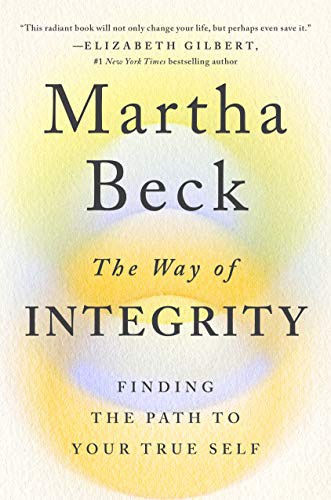
The Way of Integrity
by Martha Beck · 2021
A former Harvard sociologist turned life coach uses Dante's Divine Comedy as a map for the messy, often relationship-wrecking process of becoming honest with yourself.
Worth reading? The Way of Integrity works because Beck refuses to make integrity sound comfortable. She defines it plainly, the wholeness that comes from your inner experience matching your outer life, and then builds a four-stage process, using Dante's descent through hell, purgatory, and paradise as the literal structure, for closing that gap. The honesty required to start is often the hardest part: Beck asks you to notice every small, ordinary lie you tell to keep the peace, and to admit that some of your relationships and routines were built on a version of you that wasn't real. It's an Oprah's Book Club pick for a reason, it's genuinely moving, but Beck doesn't undersell the cost. This is a book about the process being disruptive on purpose, not a gentle nudge toward better vibes.
| Full Title | The Way of Integrity: Finding the Path to Your True Self |
|---|---|
| Author | Martha Beck |
| Published | 2021 |
| Publisher | The Open Field |
| Category | Religion & Spirituality |
| Favorite quote | “Integrity means your inner and outer worlds are consistent with each other.” |
The Verdict
Beck earns her Oprah’s Book Club pick by refusing the easy version of this topic. She’s not selling “authenticity” as a vibe. She defines integrity precisely, your inner experience matching your outer life, and then builds an actual structure for getting there, borrowing Dante’s descent through hell and ascent through purgatory to paradise as the literal map. It sounds like a stretch on paper. On the page it works, because the stages track real psychological territory: noticing the lie, grieving what you built on top of it, finding a truer way, then actually living it.
What she doesn’t do is soften the cost. Closing the gap between what you feel and what you perform can cost you relationships and routines that only worked because you weren’t being honest. Read it if you already suspect you’re living some version of a lie and want a real process, not another call to “just be yourself.” Skip it if you’re looking for gentle, low-stakes encouragement, Beck is explicit that this one can get disruptive.
you know you're living some kind of a lie, small or large, and want a structured process for finding your way back to yourself instead of just being told to 'be authentic'
you want gentle, incremental advice -- Beck's process is explicitly disruptive and can cost you relationships and routines that were built on the version of you that wasn't being honest
Book Summary
Integrity, in Beck's specific definition, means your inner experience and your outer life actually match, not the more common meaning of moral rectitude. Most people carry a gap between what they feel and what they perform, and that gap is the source of most of their chronic unhappiness.
Dante's Divine Comedy, descent through hell, ascent through purgatory, arrival at paradise, is used as a literal structural map for the four stages of finding your way back to integrity: recognizing the lie, letting go, finding the new way, and living it out.
Small, socially acceptable lies, the ones you tell to keep relationships and routines running smoothly, are treated as the real obstacle, not big dramatic dishonesty. Beck argues closing the gap between feeling and performance often costs real relationships and structures built on the false version of you.
Top 8 Lessons from The Way of Integrity
- Integrity means your inner experience and outer life actually match -- it's not primarily about moral rectitude in the usual sense.
- Small, everyday lies told to keep the peace are the real obstacle to integrity, not big dramatic dishonesty.
- Dante's descent-ascent structure in the Divine Comedy maps onto four real stages: recognizing the lie, letting go, finding the new way, living it.
- Chronic unhappiness often traces back to the gap between what you actually feel and what you're performing for others.
- Some relationships and routines were built on a version of you that wasn't honest, and closing the integrity gap can genuinely cost you those.
- The body keeps signals about where you're being dishonest with yourself, and Beck treats physical sensation as diagnostic information, not noise.
- Creativity and playfulness are framed as tools for finding your way back to your true self, not just personality traits some people happen to have.
- The process is disruptive by design -- Beck doesn't offer a version of integrity that costs you nothing.
Top 1 Quotes from The Way of Integrity
"Integrity means your inner and outer worlds are consistent with each other."
Martha Beck, The Way of Integrity
Frequently Asked Questions
Is The Way of Integrity worth reading?
Yes, especially if you suspect you're living some version of a lie, small or large, and want an actual structured process instead of generic 'be authentic' advice.
What does Martha Beck mean by 'integrity' in this book?
Not moral rectitude in the usual sense -- Beck means your inner experience and outer life actually matching, with the gap between them as the source of most chronic unhappiness.
What is the main idea of The Way of Integrity?
A four-stage process, mapped onto Dante's descent through hell, purgatory, and paradise, for closing the gap between what you feel and what you perform for others.
Is this book's process gentle or disruptive?
Disruptive by design -- Beck is upfront that finding your way back to integrity can cost real relationships and routines built on a dishonest version of you.
Who should read The Way of Integrity?
Anyone who knows they're telling small, socially acceptable lies to keep the peace and wants a real process for closing that gap, not just a mindset shift.
Ready to read it?
Get The Way of Integrity on Amazon