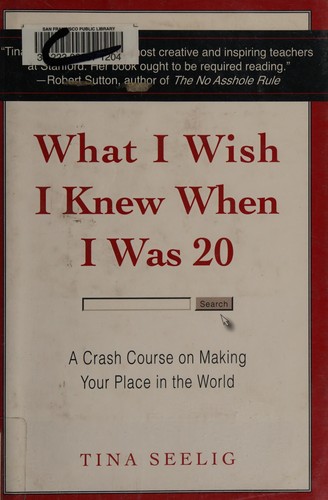
What I Wish I Knew When I Was 20
by Tina Seelig · 2009
Tina Seelig's Stanford-tested lessons on unlocking your own ingenuity.
Worth reading? Seelig's book is a warm, practical creativity course: reframe problems, take smart risks, learn from failure. More inspiration than framework, but a great early-career nudge. Skip it if you already teach design thinking.
| Author | Tina Seelig |
|---|---|
| Published | 2009 |
| Category | Business & Money |
| Favorite quote | “The most important resource you have is your own ingenuity.” |
The Verdict
Seelig’s book is a warm, practical creativity course: reframe problems, take smart risks, learn from failure. More inspiration than framework, but a great early-career nudge. Skip it if you already teach design thinking.
students and young professionals hungry for a creativity-and-risk playbook
you already run experiments and reframe failure routinely
Book Summary
Tina Seelig's Stanford-tested lessons on unlocking your own ingenuity. It earns its place by giving you a clear lens you can apply, not just inspiration. Creativity is a renewable resource you can cultivate. Reframe constraints as opportunities. The practical move is to read it once, then act on the one idea that maps to your current bottleneck, rereading the whole thing rarely adds more than executing the part you skipped.
Top 10 Lessons from What I Wish I Knew When I Was 20
- Creativity is a renewable resource you can cultivate.
- Reframe constraints as opportunities.
- Take smart risks and fail forward.
- Luck favors the prepared and the bold.
- Know yourself to direct your own life.
- Real value comes from noticing overlooked opportunities, not from needing capital.
- Waiting for permission is a habit, not a rule -- most doors open if you just push.
- A failure résumé, listing what went wrong and what you learned, is as valuable as the traditional one.
- Small, unglamorous problems are often disguised opportunities nobody else bothered to solve.
- Attitude shapes the opportunities you notice -- optimists and pessimists work from the same facts.
Top 5 Quotes from What I Wish I Knew When I Was 20
"The most important resource you have is your own ingenuity."
Tina Seelig, What I Wish I Knew When I Was 20
"Failure is a great teacher if you're willing to learn."
Tina Seelig, What I Wish I Knew When I Was 20
"Never miss an opportunity to be fabulous."
Tina Seelig, What I Wish I Knew When I Was 20
"The harder you work, the luckier you get."
Tina Seelig, What I Wish I Knew When I Was 20
"Don't be in a rush to get to your final destination -- the side trips and unexpected detours quite often lead to the most interesting people, places, and opportunities."
Tina Seelig, What I Wish I Knew When I Was 20
Frequently Asked Questions
Is What I Wish I Knew When I Was 20 worth reading?
Yes, if the description fits you, students and young professionals hungry for a creativity-and-risk playbook. Skip it if you already run experiments and reframe failure routinely.
What is the main idea of What I Wish I Knew When I Was 20?
Seelig's book is a warm, practical creativity course: reframe problems, take smart risks, learn from failure.
Who should read What I Wish I Knew When I Was 20?
Students and young professionals hungry for a creativity-and-risk playbook. Skip it if you already run experiments and reframe failure routinely.
What will you get out of What I Wish I Knew When I Was 20?
A clearer, opinionated take you can act on, plus the sharpest lessons pulled into a short list so you don't have to read the whole book to decide.
Ready to read it?
Get What I Wish I Knew When I Was 20 on Amazon