Warren Buffett's Bookshelf: 7 Books He Actually Recommends

Updated July 8, 2026 · 7 books

Warren Buffett says reading built his fortune, and he’s named names for sixty years. This list collects seven books he has actually recommended in shareholder letters, annual meetings, and interviews. No guesses, no “books like Buffett would read.”

The pattern across the seven is obvious once you see it: Graham for price discipline, Fisher for quality, Munger for thinking, Brooks and Schwed for human behavior, Thorndike for capital allocation. Buffett’s system is not secret. It’s on this shelf, and most of it costs less than a single share of anything he owns.

Start with the Essays if you want Buffett himself, or Graham if you want to start where he started.

Quick Comparison

#BookAuthorBest for
1The Intelligent InvestorBenjamin Grahamserious investors ready to learn value investing from the sourceAmazon
2The Essays of Warren BuffettWarren Buffett & Lawrence A. Cunninghaminvestors who want Buffett's actual thinking instead of books about himAmazon
3Common Stocks and Uncommon ProfitsPhilip A. Fisherlong-term investors who want to evaluate business quality, not just priceAmazon
4Poor Charlie's AlmanackCharlie Munger (ed. Peter D. Kaufman)readers who want to think better across disciplines, not just invest betterAmazon
5Business AdventuresJohn Brooksreaders who learn from stories and want business writing that's actually literatureAmazon
6Where Are the Customers' Yachts?Fred Schwed Jr.anyone about to pay a financial professional for adviceAmazon
7The OutsidersWilliam N. Thorndikeinvestors and operators who want to understand capital allocationAmazon

The Books

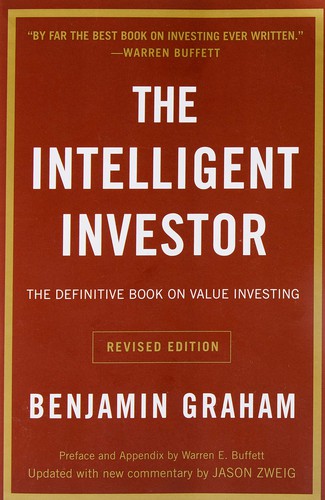
The Intelligent Investor by Benjamin Graham book cover

1. The Intelligent Investor

Benjamin Graham · 1949

Warren Buffett calls it the best book on investing ever written. He's not wrong.

Seventy-five years old and still the foundation of value investing. Graham gives you two ideas worth the whole book: Mr. Market, the manic business partner you should exploit rather than follow, and margin of safety, the discipline of buying below value. The Jason Zweig commentary in the revised edition translates 1949 examples into modern terms. Chapters 8 and 20 alone justify the price.

Read it if: serious investors ready to learn value investing from the source

Skip it if: you want a quick, easy read (it's dense, and beginners should start with simpler books)
Full verdict: The Intelligent Investor →

The Essays of Warren Buffett by Warren Buffett & Lawrence A. Cunningham book cover

2. The Essays of Warren Buffett

Warren Buffett & Lawrence A. Cunningham · 1997

Buffett's shareholder letters, organized by theme. The closest thing to a book he ever wrote.

Cunningham arranged decades of Berkshire shareholder letters by topic: governance, valuation, accounting, acquisitions. Buffett explains more clearly than any textbook because he’s writing to persuade partners, not impress academics. Read it slowly. One section per sitting beats bingeing it.

Read it if: investors who want Buffett's actual thinking instead of books about him

Skip it if: you're brand new to investing (the letters assume you know the basics)

Full verdict: The Essays of Warren Buffett →

Common Stocks and Uncommon Profits by Philip A. Fisher book cover

3. Common Stocks and Uncommon Profits

Philip A. Fisher · 1958

The growth investing classic Buffett says shaped him almost as much as Graham did.

Fisher’s fifteen points for finding outstanding companies and his “scuttlebutt” method (ask customers, suppliers, and competitors what they think) are still how the best quality investors work. Buffett describes himself as mostly Graham plus a meaningful dose of Fisher. Dry in places, permanent in substance.

Read it if: long-term investors who want to evaluate business quality, not just price

Skip it if: you're new to investing (start with Graham or an index fund book first)

Full verdict: Common Stocks and Uncommon Profits →

Poor Charlie's Almanack by Charlie Munger (ed. Peter D. Kaufman) book cover

4. Poor Charlie's Almanack

Charlie Munger (ed. Peter D. Kaufman) · 2005

Munger's mental models and the psychology of human misjudgment, in one strange, wonderful book.

Munger’s talk on the 25 psychological tendencies that cause misjudgment is worth the whole volume, and the “latticework of mental models” idea launched a thousand blogs. The Stripe Press edition trimmed it well. Not really an investing book. A thinking book that happens to be written by an investor.

Read it if: readers who want to think better across disciplines, not just invest better

Skip it if: you want a linear how-to book (this is speeches, talks, and tangents)

Full verdict: Poor Charlie's Almanack →

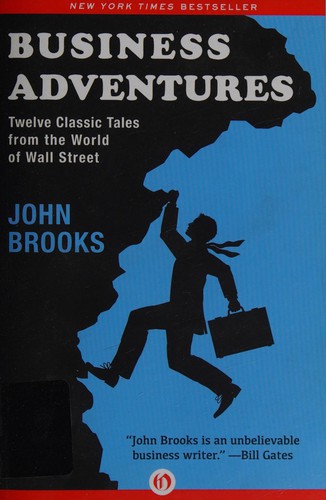
Business Adventures by John Brooks book cover

5. Business Adventures

John Brooks · 1969

Bill Gates asked Buffett for his favorite business book. Buffett mailed him this one.

Twelve New Yorker essays from the 1960s: the Ford Edsel disaster, the three-day stock market crash of 1962, the rise of Xerox. The companies are dated. The human behavior (hubris, panic, herding, denial) is identical to whatever happened in markets last week. That’s why Gates and Buffett still recommend it.

Read it if: readers who learn from stories and want business writing that's actually literature

Skip it if: you need takeaways in bullet points (Brooks makes you earn the lessons)

Full verdict: Business Adventures →

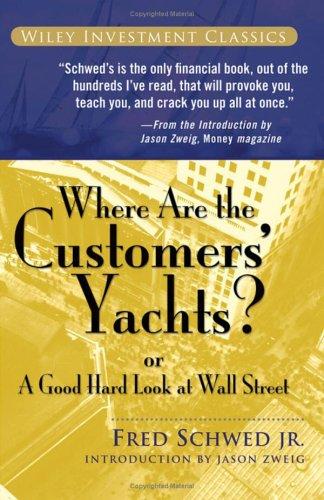
Where Are the Customers' Yachts? by Fred Schwed Jr. book cover

6. Where Are the Customers' Yachts?

Fred Schwed Jr. · 1940

The funniest book ever written about Wall Street, and still the most honest.

The title is the whole thesis: a visitor admires the brokers’ yachts and asks where the customers’ yachts are. There aren’t any. Schwed’s 1940 skewering of financial advice, forecasting, and fee-collecting reads like it was written about last year’s market. Buffett recommends it. Eighty years of being right is hard to argue with.

Read it if: anyone about to pay a financial professional for advice

Skip it if: you want actionable strategy (this is satire with a warning label)

Full verdict: Where Are the Customers' Yachts? →

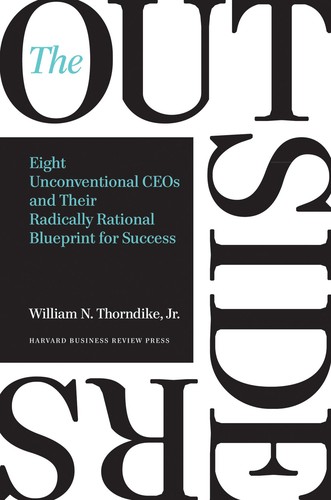
The Outsiders by William N. Thorndike book cover

7. The Outsiders

William N. Thorndike · 2012

Eight CEOs who crushed the market by ignoring everything CEOs are supposed to do.

Thorndike profiles eight unconventional CEOs (Henry Singleton, Katharine Graham, John Malone) who treated capital allocation as the CEO’s real job: buy back cheap stock, avoid dilution, decentralize everything. Buffett recommended it at a Berkshire meeting and it became an operator cult classic. Deservedly.

Read it if: investors and operators who want to understand capital allocation

Skip it if: you want leadership inspiration (these CEOs were ruthless calculators, not visionaries)

Full verdict: The Outsiders →

Frequently Asked Questions

What is Warren Buffett's favorite book?

The Intelligent Investor by Benjamin Graham, which he read at 19 and calls the best book on investing ever written. Graham later became his teacher at Columbia and his employer.

What book did Buffett give Bill Gates?

Business Adventures by John Brooks. Gates asked for Buffett's favorite business book in 1991, Buffett mailed his personal copy, and Gates has called it the best business book he's ever read.

Did Warren Buffett write a book?

No. The closest thing is The Essays of Warren Buffett, which organizes his Berkshire Hathaway shareholder letters by theme. It's his actual thinking in his own words, and he has endorsed the collection.

How many hours a day does Buffett read?

Buffett has said he spends five to six hours a day reading reports, filings, and books, and famously told students the knowledge compounds like interest.

Keep Reading