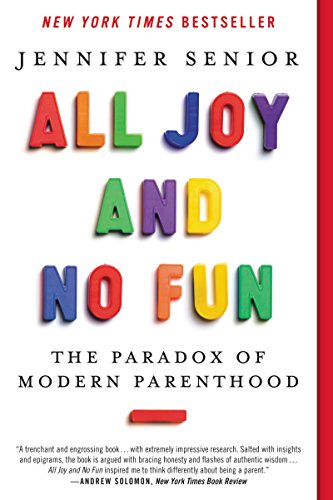
All Joy and No Fun
by Jennifer Senior · 2014
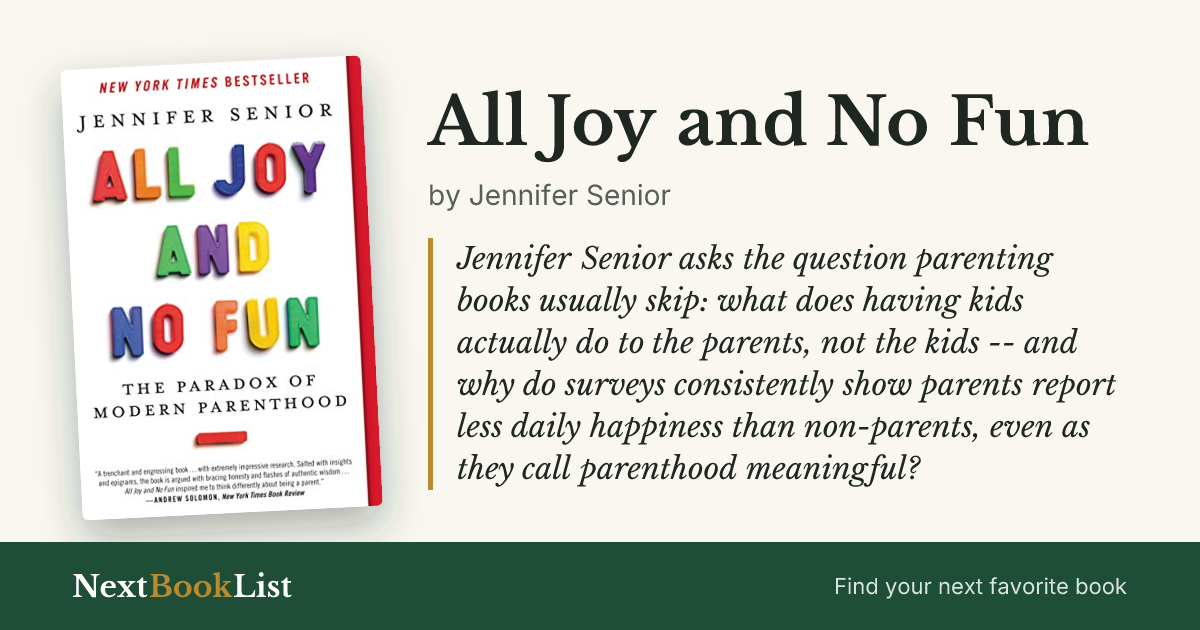
Jennifer Senior asks the question parenting books usually skip: what does having kids actually do to the parents, not the kids -- and why do surveys consistently show parents report less daily happiness than non-parents, even as they call parenthood meaningful?
Worth reading? All Joy and No Fun is one of the more honest books written about parenthood precisely because it isn't trying to sell you on having kids or convince you it's constant misery either. Senior takes seriously the research showing parents report lower daily happiness than non-parents while also reporting more life meaning, and instead of resolving that tension with a platitude, she spends the book actually investigating it -- through marriage strain, the loss of autonomy, and the particular stress of the modern 'concerted cultivation' parenting style.
| Full Title | All Joy and No Fun: The Paradox of Modern Parenthood |
|---|---|
| Author | Jennifer Senior |
| Published | 2014 |
| Publisher | Ecco |
| Category | Parenting & Relationships |
| Favorite quote | “Children may or may not be a source of happiness, but they are indisputably a source of meaning.” |
The Verdict
Senior does the thing most parenting books avoid: she takes the uncomfortable research seriously instead of spinning it into reassurance. Parents genuinely do report less daily happiness than non-parents in a lot of studies, and instead of explaining that away, she investigates what’s actually driving it.
The marriage material is the strongest section – the specific, granular ways children reshape a partnership, arguments over division of labor especially, land harder than the more general “parenting is hard” framing most books settle for.
Read it if you want an honest, well-researched look at what having kids actually does to parents, not just kids. Skip it if you’re looking for parenting advice – this book studies parents, it doesn’t coach them.
you want an honest, well-reported look at how parenthood reshapes marriage, identity, and daily well-being, grounded in real research and interviews rather than advice-giving
you want a how-to parenting guide -- this book studies the psychological and sociological effects of parenting on parents themselves, and offers almost no direct parenting advice
Book Summary
Senior opens with research showing a consistent gap between parents' reported daily happiness (often lower than non-parents', especially during the moment-to-moment grind of childcare) and their reported sense of life meaning (often higher), and treats that gap as the book's central puzzle rather than something to explain away.
A major thread is how children change a marriage -- the loss of autonomy and leisure time, the renegotiation of household labor, and the way arguments about parenting itself (rather than money or in-laws) become a leading source of marital conflict for many couples.
Senior examines "concerted cultivation," the modern, intensive parenting style common among middle- and upper-middle-class American parents -- heavily scheduled enrichment activities, close academic oversight -- and how it raises the psychological and time cost of parenting compared to earlier, less curated generations.
The book also looks at parenthood's later stages, including the surprising research finding that parents of teenagers often report more day-to-day stress than parents of younger children, complicating the assumption that parenting gets easier as kids grow older.
Top 7 Lessons from All Joy and No Fun
- Research consistently shows parents report lower moment-to-moment daily happiness than non-parents, especially during hands-on childcare, while also reporting higher overall life meaning -- the book treats this gap as real and worth investigating, not a contradiction to explain away.
- Arguments about parenting decisions and division of labor, not just money or extended family, are a major and underdiscussed source of marital conflict after having children.
- 'Concerted cultivation' -- the intensive, heavily scheduled, enrichment-focused parenting style common among many modern middle-class parents -- raises the psychological and time cost of parenting compared to earlier generations' less curated approach.
- Loss of autonomy (control over one's own schedule, sleep, and leisure time) is one of the most consistently reported sources of parental stress, independent of how much a parent loves their child.
- Parents of teenagers often report as much or more daily stress than parents of young children, undercutting the common assumption that parenting gets steadily easier as children grow older.
- Parenthood's meaning and its daily emotional experience can be genuinely different things -- a parent can find deep meaning in raising a child while still experiencing lower day-to-day happiness during the actual work of it.
- Household labor division, especially around childcare, remains a significant and often unequal source of tension between parents even in relationships that were egalitarian before children.
Top 1 Quotes from All Joy and No Fun
"Children may or may not be a source of happiness, but they are indisputably a source of meaning."
Jennifer Senior, All Joy and No Fun
Frequently Asked Questions
Is All Joy and No Fun worth reading?
Yes -- it's an honest, well-reported look at how parenthood actually affects parents, grounded in real research rather than parenting advice or platitudes.
What is All Joy and No Fun about?
Jennifer Senior examines the psychological and sociological effects of raising children on parents themselves, including marriage strain, loss of autonomy, and the demands of modern intensive parenting.
Is All Joy and No Fun a parenting advice book?
No -- it studies the effects of parenthood on parents' well-being and relationships rather than offering direct advice on how to raise children.
Does All Joy and No Fun say parenting makes people unhappy?
It's more nuanced than that -- research it cites shows parents often report lower daily happiness but higher life meaning, and the book treats that gap as genuinely worth investigating rather than resolving into a simple verdict.
Ready to read it?
Get All Joy and No Fun on Amazon