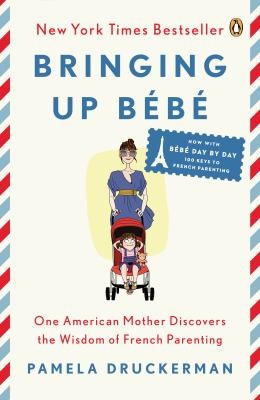
Bringing Up Bébé
by Pamela Druckerman · 2012
An American journalist raising kids in Paris notices French children who sleep through the night as infants, eat vegetables without a fight, and let adults finish a sentence -- and sets out to figure out why.
Worth reading? Bringing Up Bébé earns its long shelf life in the parenting-book genre because it's specific and funny instead of preachy. Druckerman isn't arguing French parents are morally superior; she's noticing concrete, replicable differences -- how the French introduce a wide variety of foods early and expect kids to eat what's served, how they use 'the pause' before rushing to a crying infant -- and asking why. It's most useful as a set of testable ideas, not a universal parenting doctrine.
| Full Title | Bringing Up Bébé: One American Mother Discovers the Wisdom of French Parenting |
|---|---|
| Author | Pamela Druckerman |
| Published | 2012 |
| Publisher | Penguin Books |
| Category | Parenting & Relationships |
The Verdict
Druckerman’s real skill here is specificity. Instead of vague claims about French superiority, she zeroes in on concrete, testable practices – “the pause” before responding to a cry, structured mealtimes with no separate kid menu – and explains the cultural logic behind each one.
That specificity is also the honest limit of the book: this is one journalist’s observational synthesis of her own experience and interviews, not a controlled study. Treat the practices as ideas worth trying, not guarantees.
Read it if you want a funny, culturally curious comparison of parenting norms with a few genuinely useful, testable ideas. Skip it if you want rigorous parenting science instead of memoir and observation.
you want a comparative, culturally curious look at parenting norms, told through Druckerman's own experience raising children in France, with genuinely useful ideas around sleep training and food exposure
you want a rigorous parenting-science book -- this is memoir and cultural observation, drawing on Druckerman's own experience and interviews, not controlled research
Book Summary
Druckerman, an American journalist living in Paris, notices that French children seem to sleep through the night much earlier as infants, eat a wide variety of foods without constant negotiation, and generally behave with more patience in public than the American children she compares them to, and sets out to understand the cultural mechanisms behind it.
A central concept is "the pause" ("la pause") -- rather than rushing to comfort a crying infant instantly, French parents commonly wait a few minutes to see if the baby will self-soothe, which Druckerman connects to earlier independent sleep in French infants.
French food culture, in Druckerman's account, treats children's palates as something to be deliberately expanded through early exposure to a wide variety of foods served on a structured schedule, rather than accommodating picky eating with separate "kid food."
Druckerman also describes a broader French parenting philosophy that treats children as capable of patience and self-regulation from a young age, with parents modeling calm authority rather than constant negotiation, while being clear this is her own observational synthesis, not a controlled study.
Top 7 Lessons from Bringing Up Bébé
- 'The pause' -- waiting a few minutes before responding to an infant's cry rather than rushing in instantly -- is associated in Druckerman's account with earlier self-soothing and more independent infant sleep.
- Introducing a wide variety of foods early and expecting children to eat what's served, rather than routinely offering separate 'kid food,' may expand a child's palate over time.
- Structured mealtimes, without constant snacking between them, are presented as part of why French children reportedly eat more varied diets without as much negotiation.
- Modeling calm, consistent authority -- rather than constant explanation or negotiation -- is part of the French parenting approach Druckerman describes for building patience in young children.
- Cultural context shapes parenting norms significantly -- practices that seem strict or unusual in one culture (structured meals, delayed response to crying) are simply the default, unremarkable norm in another.
- The book is Druckerman's personal and journalistic synthesis of her own experience and interviews, not a controlled parenting study, which is worth remembering before treating any single practice as guaranteed to work.
- Parental self-care and identity outside of parenting is treated as part of the French model Druckerman describes, contrasted with an American tendency toward all-consuming, child-centered parenting.
Frequently Asked Questions
Is Bringing Up Bébé worth reading?
Yes -- it's a specific, funny, comparative look at parenting norms with genuinely useful ideas around sleep and food, even though it's memoir and observation rather than controlled research.
What is Bringing Up Bébé about?
An American journalist raising children in Paris compares French and American parenting practices around infant sleep, food introduction, and discipline, and tries to understand the cultural differences behind them.
Is Bringing Up Bébé based on scientific research?
It's primarily memoir and cultural observation, drawing on Druckerman's own experience and interviews rather than controlled studies, though it references some parenting and child-development research.
What is 'the pause' in Bringing Up Bébé?
It's Druckerman's term for a French parenting habit of waiting a few minutes before responding to an infant's cry, which she connects to earlier independent infant sleep.
Ready to read it?
Get Bringing Up Bébé on Amazon