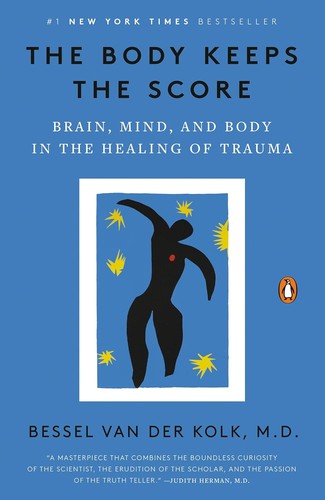
The Body Keeps the Score
by Bessel van der Kolk · 2014
Trauma lives in the body, not just the mind. The book that changed how the world talks about it.
Worth reading? The definitive trauma book for general readers, and the one that dragged trauma science into the mainstream conversation. If you're a clinician you'll want the research papers; if you're a survivor or a helper, start here before the denser texts. It overreaches in spots, but no other book reframes "what happened to you" this clearly. Skip it if you're in acute crisis — the case studies are heavy, and you should work with a professional first.
| Author | Bessel van der Kolk |
|---|---|
| Published | 2014 |
| Category | Self-Improvement & Psychology |
The Verdict
Van der Kolk spent forty years treating trauma and explains why talk alone often isn’t enough: trauma reshapes brain and body, so recovery runs through both. Some claims outrun the evidence and clinicians debate parts. Its influence is not debatable. Years on the bestseller list because it names what millions couldn’t.
trauma survivors, their families, and anyone in a helping profession
you're in acute crisis (the case studies are heavy; work with a professional first)
Book Summary
Trauma isn't just a memory; it rewires the brain and body, so talk therapy alone often misses the part of you that's stuck. Recovery has to run through the body too — via yoga, EMDR, neurofeedback, theatre, or sport — because the system that broke is the one that heals. The throughline is neuroplasticity: the brain can be retrained, and safety, rhythm, and relationships are the levers. Van der Kolk's bigger point is that our institutions (schools, courts, clinics) keep retraumatizing people instead of helping them regulate.
Top 6 Lessons from The Body Keeps the Score
- Your body stores trauma even when your mind has "moved on"; symptoms are biology, not weakness.
- Talk therapy alone is often not enough; include bottom-up, body-based work.
- Relationships are the single biggest factor in both harm and healing.
- Small doses of safety and rhythm (breath, movement) rebuild a felt sense of control.
- Childhood adversity compounds; name it early instead of powering through.
- Recovery is retraining the nervous system, not just understanding what happened.
Frequently Asked Questions
Is The Body Keeps the Score worth reading?
For survivors, families, and helpers it's the clearest map of trauma's effects and the range of treatments. Clinicians will want the primary research, and people in crisis should pair it with a professional.
What is the main idea of The Body Keeps the Score?
Trauma reshapes brain and body, so healing has to engage the body — through movement, rhythm, and relationship — not just the talking mind.
How long does it take to read The Body Keeps the Score?
At 520 pages it's a solid read — roughly 12 to 15 hours for most people.
Who should read The Body Keeps the Score?
Trauma survivors, their families, and anyone in a helping profession who wants to understand why talk therapy often isn't enough.
Ready to read it?
Get The Body Keeps the Score on Amazon