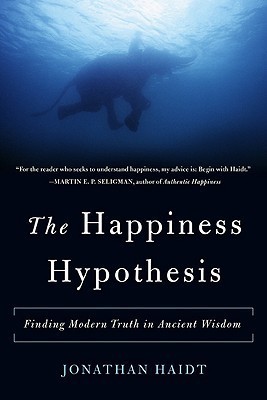
The Happiness Hypothesis
by Jonathan Haidt · 2006
Ancient wisdom, tested against modern psychology. The rider and the elephant live here.
Worth reading? The best bridge between ancient wisdom and modern psychology, and the book to read if you want Buddha, the Stoics, and scripture tested against brain scans instead of taken on faith. Haidt's rider-and-elephant model explains more about why you can't just "decide" to be happy than any quick-tips list. Skip it if you want fast happiness hacks -- Haidt is a professor and writes like the good kind, which means he takes his time.
| Author | Jonathan Haidt |
|---|---|
| Published | 2006 |
| Category | Self-Improvement & Psychology |
The Verdict
Haidt takes ten great ideas from ancient traditions and checks each against the research: does adversity make you stronger, does virtue bring happiness, is happiness inside you? His rider-and-elephant metaphor for reason and emotion became the standard model in half the books written since. The thinking person’s happiness book.
readers who want serious psychology connected to Buddha, the Stoics, and scripture
you want quick happiness tips (Haidt is a professor and writes like the good kind)
Book Summary
Happiness equals your biological set point plus your life conditions plus your voluntary activities (H = S + C + V). You can't move the set point much, but you can change what you do on purpose -- and that's where the lever is.
The mind is a rider on an elephant: the rational rider is small, slow, and usually justifies where the emotional elephant already wants to go. Real change means training the elephant through habit and environment, not arguing with it.
Ancient rules (reciprocity, virtue, meaning) survived because they fit how the brain actually works. Scripture and the Stoics weren't psychology textbooks, but they found truths that modern research is only now confirming.
Top 6 Lessons from The Happiness Hypothesis
- Happiness = set point + conditions + voluntary activity; you control the last.
- Your rational mind rides an elephant it rarely steers.
- Change behavior by shaping environment, not by arguing with yourself.
- Voluntary activity (flow, relationships) moves the needle more than money.
- Ancient moral wisdom often maps onto modern brain science.
- Don't expect a permanent high; adaptation is built in.
Frequently Asked Questions
Is The Happiness Hypothesis worth reading?
Yes if you want serious psychology tied to Buddha, the Stoics, and scripture. Skip it if you want quick happiness tips -- Haidt is a professor and writes like the good kind.
What is the main idea of The Happiness Hypothesis?
Happiness is mostly your fixed set point plus conditions plus what you choose to do; the rational mind is a weak rider on a strong emotional elephant, so change comes from training, not lecturing, yourself.
How long does it take to read The Happiness Hypothesis?
About 336 pages, written for a smart general reader -- roughly a week of commutes or a focused weekend.
Who should read The Happiness Hypothesis?
Readers who want serious psychology connected to Buddha, the Stoics, and scripture. Skip it if you want quick happiness tips.
Ready to read it?
Get The Happiness Hypothesis on Amazon