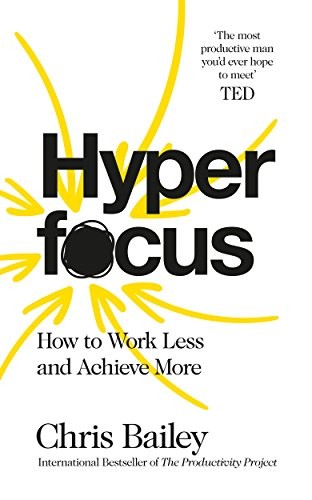
Hyperfocus
by Chris Bailey · 2018
Manage your attention, not your time. Includes the case for deliberate mind-wandering.
Worth reading? The friendliest, best-researched attention book for knowledge workers, and a better on-ramp than Deep Work if you want the studies attached. Read it before Cal Newport's stricter version if you like gentle, evidence-led guidance. Skip it if you've already absorbed Deep Work — the overlap is real, just packaged nicer.
| Author | Chris Bailey |
|---|---|
| Published | 2018 |
| Category | Self-Improvement & Psychology |
The Verdict
Bailey splits attention into two modes: hyperfocus for execution, scatterfocus for creativity and planning. The second half is the differentiator, arguing that intentional mind-wandering is where connections form, which most focus books treat as the enemy. Lighter than Newport, more actionable per page.
knowledge workers who want practical attention management with the research attached
you've read Deep Work and implemented it (significant overlap, friendlier packaging)
Book Summary
Chris Bailey splits attention into two modes: Hyperfocus (one task, deep) and Scatterfocus (deliberate mind-wandering), and you need both. Attention is a finite resource you manage, not time, and most "distractions" are internal, not your phone. Building the habit means cutting the easiest distractors, setting intentions before you start, and protecting blocks of focused work. The wandering mode isn't downtime — it's where your brain connects dots.
Top 6 Lessons from Hyperfocus
- Manage attention, not time — they're not the same resource.
- You need Hyperfocus and Scatterfocus; one without the other burns you out.
- Most distractions are internal, not your notifications.
- Set a clear intention before you start a task.
- Deliberate mind-wandering solves problems your focus can't.
- Cut the easiest distractors first; willpower isn't the plan.
Frequently Asked Questions
Is Hyperfocus worth reading?
Yes if you want practical attention management with the research cited. No if Deep Work already changed how you work.
What is the main idea of Hyperfocus?
Split your attention into deep focus and deliberate wandering, and manage it deliberately — most distraction starts in your head.
How long does it take to read Hyperfocus?
256 pages — about a week of commutes or a focused weekend.
Who should read Hyperfocus?
Knowledge workers who want practical attention management with the research attached.
Ready to read it?
Get Hyperfocus on Amazon